
Slow Stitching for Beginners: A Gentle Creative Reset (No Experience Needed)

As we move deeper into March and stand on the threshold of early April, the world outside our windows is beginning to stir. In the gardens around us, the first pale greens are pushing through the soil; there is a certain crispness in the air that whispers of new beginnings. At The Creative Nook, we often find that this seasonal shift brings with it a desire for a "reset", not the high-energy, frantic sort of change, but a quiet, internal clearing of space.
For many of us, the pace of ordinary life has become a series of screens, notifications, and "to-do" lists that never quite seem to end. We are often rushed, even when we are trying to relax. If you are seeking a way to reclaim your presence, to quiet the noise of the day, and to create something beautiful with your own two hands, we invite you to explore the practice of slow stitching.
What is Slow Stitching?
It is perhaps easier to begin by saying what slow stitching is not. It is not traditional embroidery, where every French knot must be uniform and every leaf must follow a strict, pre-printed pattern. It is not knitting or crochet, which often requires a mathematical counting of stitches and a specific tension to ensure a garment fits just so.
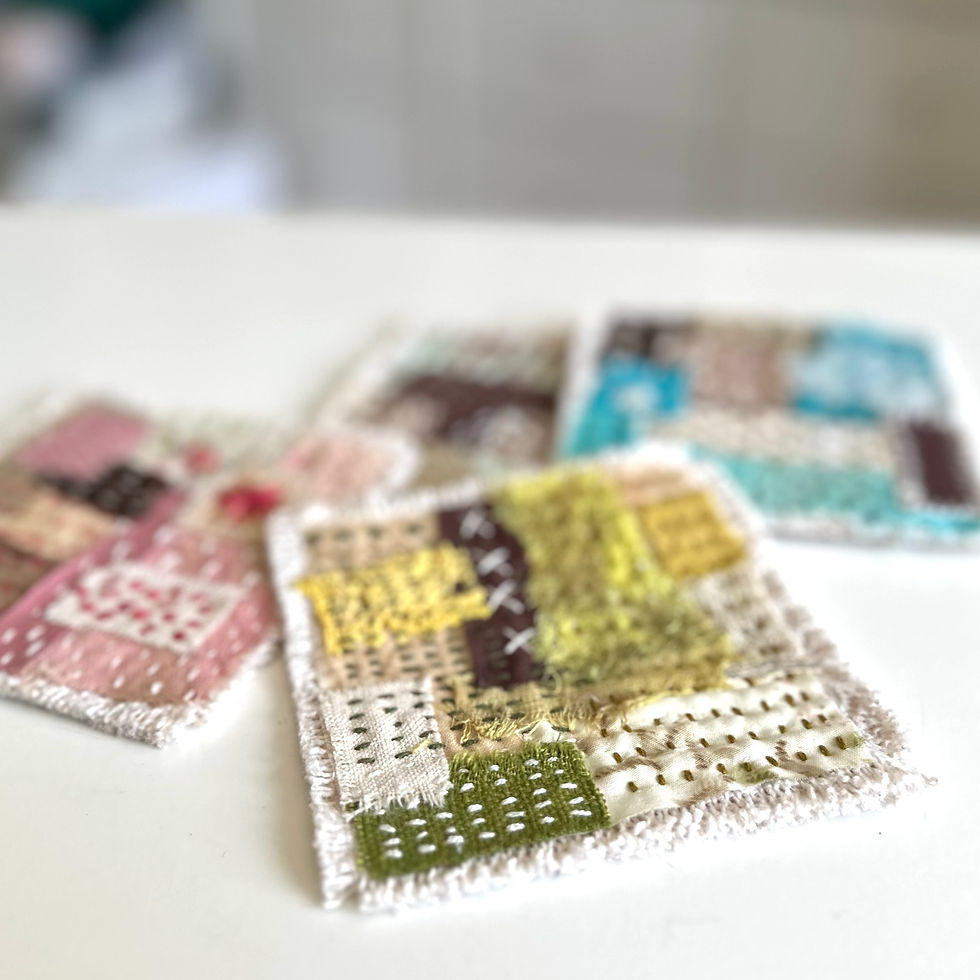
Slow stitching is something much more primal and forgiving. It is the simple act of using a needle and thread to join pieces of fabric together in a way that feels right to you. It is a form of meditative hand-stitching that values the process far more than the final result. It is collage, but with textiles. It is mark-making, but with thread.
In its purest form, slow stitching asks nothing of you except your presence. It is a journey into the tactile world of layered textiles and considered colour combinations. It is an art of noticing, the way a needle feels as it passes through soft linen; the way a particular shade of green sits alongside a scrap of vintage lace; the way a repetitive "running stitch" creates a rhythm that eventually calms the heart.
Why We Stitch: The Gift of a Creative Reset
In our busy lives, we often forget the importance of tactile experiences. We spend so much time in the abstract world of thoughts and digital data that we lose touch with the physical. Slow stitching acts as a bridge back to ourselves.
When you sit down with a needle and thread, your world naturally shrinks to the few inches of fabric in your lap. The "what ifs" of tomorrow and the "if onlys" of yesterday begin to fade. There is only the thread, the fabric, and the next stitch. This is why we call it a "creative reset." It isn't about producing a masterpiece to show off; it's about giving your mind a soft place to land.
For those who feel a sense of loneliness or have recently moved to our area, these quiet rituals offer a way to connect. There is a special kind of bond that forms when a small group of people sits together in a shared, creative silence. It is a way of being together without the pressure of performance.
A Three-Session Journey at The Creative Nook
If the idea of starting alone feels a little daunting, we have designed a Slow Stitch Workshop that guides you through the process over three gentle sessions. We believe that creativity needs time to breathe, which is why we prefer a multi-month approach rather than a rushed single session.
In our workshops, we keep groups small, never more than eight people. This ensures that the atmosphere remains intimate and that everyone has the space they need to feel comfortable.
What to expect during our time together:
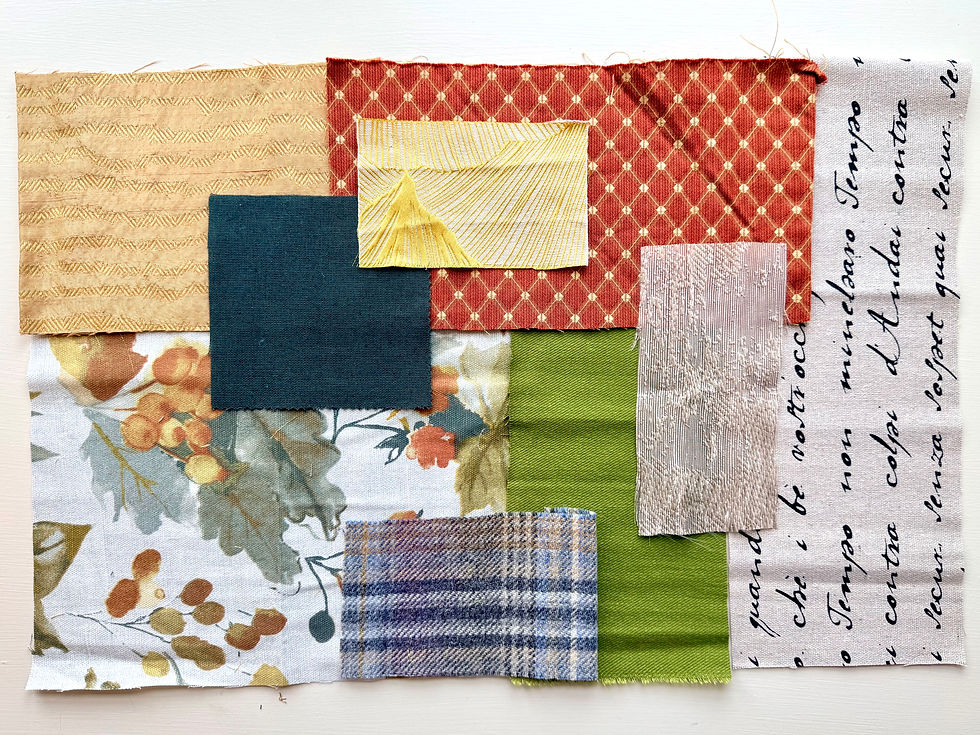
The First Gathering: Texture and Tone. We begin by exploring our materials. We provide everything you need, from vintage buttons to hand-dyed fabric scraps. You will spend time choosing a palette that speaks to you, perhaps inspired by the spring colors of 2026.
The Second Gathering: Finding the Rhythm. This session is dedicated to the stitch itself. We focus on simple stitches, used in various ways. We learn to embrace the "wobbly" line and the "imperfect" stitch as marks of the human hand. We look at how to layer your pieces and practice using a sampler square before moving on to our final project piece, an A5 Notebook Wrap.
The Third Gathering: Bringing it Together. After stitching our patchwork of textile squares to our base, we now focus on additional adornments and decoration to create a rich and colourful final piece.
Every material is provided for you. You don’t need to worry about having the "right" kit or knowing how to thread a needle. We are here to help with all of that. Our goal is to make the barrier to entry as low as possible. You can see our upcoming dates and book online if you feel a pull toward this quiet practice.

How to Start at Home: A Minimalist Guide
If you cannot join us in person just yet, you can still begin this practice tonight. The beauty of slow stitching is its accessibility. You likely already have most of what you need hidden in a drawer or a cupboard.
Gather your small bundle of peace:
A Foundation Fabric: A 10cm square of plain cotton, an old pillowcase, or even a piece of muslin or linen.
Fabric Scraps: Look for old clothes that have seen better days, or perhaps a ribbon from a gift. Don't worry about them matching perfectly; sometimes the most unexpected combinations are the most beautiful.
A Needle and Thread: Any needle that feels comfortable in your hand and any thread you have, even standard sewing thread works, though embroidery floss adds a lovely texture.
Scissors: Just to snip your thread.
The Process:
Clear a Space: Turn off the television. Put your phone in another room. Light a candle if it pleases you.
Layer: Lay your scraps onto your foundation fabric. Move them around until they feel "right." There is no science to this; it is simply about what your eye enjoys.
Stitch: Begin a simple running stitch, in and out, in and out. Don't use a hoop; let the fabric feel soft in your hands.
Notice: As you stitch, notice the tension in your shoulders and try to let it go with each exhale.
A Gentle Invitation
As the season turns, we invite you to join us. Our workshops are more than just "craft classes"; they are a chance to reconnect with yourself and a community of like-minded souls. If you feel that your life is a little too loud right now, perhaps a needle and thread are the quiet tools you need.
Beyond our slow stitching sessions, we also offer mini-retreats and journaling workshops for those looking to expand their wellbeing toolkit. You can explore all our upcoming workshops and find the one that resonates most with your heart.
There is no rush. There is no right way. There is only the next stitch.
We look forward to welcoming you to the Nook soon.


Comments